“Open your eyes. School is done.”
The voice of our faculty member echoed through the lecture hall as he culminated our medical school training with one final session. Earlier, he had lead us through a period of meditation in the last moments of class, guiding us through reflecting over our time as students and thinking about the individuals that have impacted our growth as physicians and humans.
I found myself thinking back to my first experiences as a medical student-- the first moment I stepped foot on the UCSF campus during my interview, my first day of medical school in the same lecture hall, my first patient interview in Moffitt hospital, my first time teaching an MSP session, my first clinical clerkship, my first surgery, my first delivery, and my first residency interview. As these memories whirled in my mind, I felt an overwhelming sense of gratitude to the people in my life-- my family, friends, teachers, mentors, and patients--who have been the foundation of my education and identity.
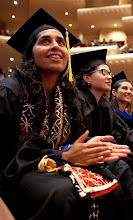
On the eve of graduation, I am overcome with a myriad of emotions--it is a confusing mix of excitement, anxiety, nostalgia, and fear. As I leave behind four years of medical school, some amazing friends, and an incredible city, I embrace the opportunity ahead. I look forward to finally being able to take care of patients and practicing medicine. With a higher level of responsibility, I know the learning curve will be steep and that I will be unprepared.
To help guide us through the unknown and nebulousness that has come to define internship, our faculty members have peppered advice into our concluding lectures.
If there is one unifying theme threaded through the lectures, it would have to be that one must remember what they do not know and to ask for help.
“If you do not know, just say ‘I do not know.’” This line was repeated to us multiple times by our faculty. It seems simple enough.
The following is a small sample of some of the advice passed on to us (listed in no particular order). I include this list as a reference to myself and as a way to calm my nerves right before I am gowned and donned the title of doctor tomorrow morning, a designation, I still feel I need to earn.
Advice from my faculty:
1. Absolute honesty is a must.
2. When working with patients and their families, remember their vulnerabilities
3. You are the intern; therefore you are at the bottom (again). Just remember that.
4. There needs to be a free flow of information up and down the chain of command similar to that in a military hierarchy.
5. Take the time to know yourself--the core you--not influenced by being a doctor
6. Realize your limited competence.
7. Do not take things personally.
8. Learn from your patient’s stories
9. Look like a doctor. And that means that men need to grow their beards on vacation. 10. No comment on the women’s dress.
11. Remember why you went into medicine in the first place--to help people
12. Find balance in your life and take care of yourself
Graduation tomorrow...
Sunday, May 15, 2011


Tuesday, March 22, 2011
Match Day
The dust has settled. Decisions have been made. Envelops have been opened. And now we are all on the same page.
Allow me to recount the details of the Match Day.
Match Day was surreal.
8AM. The celebration started with breakfast at 8 AM. I decided to skip breakfast altogether since I had very little appetite. I made myself a cup of chai. I sat in my living room and sipped the warm chai, thinking through my submitted rank list and every possible outcome. And the more I thought about it, the more I realized the futility of my thought process; I would find out soon enough. I recalled what someone had told me, "trust the match."
8:30 AM. I nervously made my way to the conference room. Before entering, I took a moment to stare out the windows and marvel at the view. The sun was starting to shine through a thin blanket of fog and the entire city along with ocean was emerging from the haze.
By the time I arrived, the room was brimming with fourth year medical students. Although the anxiety and tension was palpable, there was an overwhelming sense of community and unity that was rooted in sharing the universal experience of the match process. We had all undergone the same uncertain process, survived, and had to wait out the last moments.
More than anything else, it was so nice to be reunited with my classmates after many of us had splintered off for interviews and electives. Being in the same room reminded me that many of us had all started together and had grown together.
As students congregated in small groups around the circular tables, some picked at their breakfast, while others talked amongst themselves. To distract myself, I walked around the room, meeting my classmates.
8:45 AM. As time passed, we became more anxious, wondering when the envelopes would be laid out. Our course administrators went to the podium to welcome and congratulate us. I could barely pay attention to their remarks. My attention was divided. I only remember them instructing us to pick up our envelops in the next ten minutes.

8:50AM. The envelops were laid out, placed in three piles by alphabetical order. Masses of students made their way to the table to pick up the envelop. I stood in the corner and waited.
8:55AM. I finally separated myself from a conversation and made my way to the envelop table. The envelops were not white; they were actually manilla. As I had expected, the envelop was thin. A small label with my first and last name was on the middle. Once handed my envelop, I stood and waited for the moment of the truth.
8:59AM. Our administrators returned to the front." Congratulations to you all, we are so proud of you. Now join me, in counting down from 5 seconds." In unison, we counted down the last five seconds.

Photo c/o Sarah Paris
9:00AM. My hands were shaking. The envelop quivered in my hands. Once the envelop was opened, a white paper that came from within dropped to the ground. I picked it up and unfolded the paper, the text was a little blurry. I was not reading any words, my eyes scanned to the bottom, looking for the location of my residency.
And there it was, my first choice for training in obstetrics and gynecology- University of Michigan in Ann Arbor.
Go Blue! I was overjoyed.
I reread the page three more times and breathed a sigh of relief and smiled to myself, knowing I had matched exactly where I was supposed to match. As I had been told by several mentors and residents, "the match just seems to work out." Although I had heard it, I could now believe it.
***

To celebrate, I have enjoyed many cakes thanks to my family and friends.
Having lived in California my whole life, it will be difficult to leave my family and friends, the bay area, and the running in San Francisco. With that being said, I am looking forward to a new beginning and am excited about this Midwestern adventure; it will be an incredible learning opportunity, professionally and personally.
Above all, I feel so lucky to have made it this far and to have the support of my family, friends, and mentors. I would not be here if it were not for all these amazing people, who inspire me every day and teach me how to grow and become a stronger person. My love and respect to you all- Thank you.
Let the next adventure begin...
***
Allow me to recount the details of the Match Day.
Match Day was surreal.
8AM. The celebration started with breakfast at 8 AM. I decided to skip breakfast altogether since I had very little appetite. I made myself a cup of chai. I sat in my living room and sipped the warm chai, thinking through my submitted rank list and every possible outcome. And the more I thought about it, the more I realized the futility of my thought process; I would find out soon enough. I recalled what someone had told me, "trust the match."
8:30 AM. I nervously made my way to the conference room. Before entering, I took a moment to stare out the windows and marvel at the view. The sun was starting to shine through a thin blanket of fog and the entire city along with ocean was emerging from the haze.
By the time I arrived, the room was brimming with fourth year medical students. Although the anxiety and tension was palpable, there was an overwhelming sense of community and unity that was rooted in sharing the universal experience of the match process. We had all undergone the same uncertain process, survived, and had to wait out the last moments.
More than anything else, it was so nice to be reunited with my classmates after many of us had splintered off for interviews and electives. Being in the same room reminded me that many of us had all started together and had grown together.
As students congregated in small groups around the circular tables, some picked at their breakfast, while others talked amongst themselves. To distract myself, I walked around the room, meeting my classmates.
8:45 AM. As time passed, we became more anxious, wondering when the envelopes would be laid out. Our course administrators went to the podium to welcome and congratulate us. I could barely pay attention to their remarks. My attention was divided. I only remember them instructing us to pick up our envelops in the next ten minutes.

8:50AM. The envelops were laid out, placed in three piles by alphabetical order. Masses of students made their way to the table to pick up the envelop. I stood in the corner and waited.
8:55AM. I finally separated myself from a conversation and made my way to the envelop table. The envelops were not white; they were actually manilla. As I had expected, the envelop was thin. A small label with my first and last name was on the middle. Once handed my envelop, I stood and waited for the moment of the truth.
8:59AM. Our administrators returned to the front." Congratulations to you all, we are so proud of you. Now join me, in counting down from 5 seconds." In unison, we counted down the last five seconds.

Photo c/o Sarah Paris
9:00AM. My hands were shaking. The envelop quivered in my hands. Once the envelop was opened, a white paper that came from within dropped to the ground. I picked it up and unfolded the paper, the text was a little blurry. I was not reading any words, my eyes scanned to the bottom, looking for the location of my residency.
And there it was, my first choice for training in obstetrics and gynecology- University of Michigan in Ann Arbor.
Go Blue! I was overjoyed.
I reread the page three more times and breathed a sigh of relief and smiled to myself, knowing I had matched exactly where I was supposed to match. As I had been told by several mentors and residents, "the match just seems to work out." Although I had heard it, I could now believe it.
***

To celebrate, I have enjoyed many cakes thanks to my family and friends.
Having lived in California my whole life, it will be difficult to leave my family and friends, the bay area, and the running in San Francisco. With that being said, I am looking forward to a new beginning and am excited about this Midwestern adventure; it will be an incredible learning opportunity, professionally and personally.
Above all, I feel so lucky to have made it this far and to have the support of my family, friends, and mentors. I would not be here if it were not for all these amazing people, who inspire me every day and teach me how to grow and become a stronger person. My love and respect to you all- Thank you.
Let the next adventure begin...
***
Wednesday, March 16, 2011
Thin White Envelopes
Tomorrow we will face a table of thin white envelops. These white envelops will reveal everything, answering the questions we have been pondering for the last few months. We will finally see how our lives will unfold in the near future as we see where we will pursue our residency training.
In unison, I will open up my thin white envelop with thousands of other medical students at 9AM. After months of waiting, we will finally know where we matched.
As I count down hours, I feel a mix of emotions. A part of me has been desiring Match Day--March 17th--for some time. The anticipation and anxiety of not knowing has been unbearable. It has been like walking in a haze, knowing you can not make any plans with a big question mark lingering ahead.
At the same time, I also realize that Match Day represents a point of no return. With Match Day, I will see my future and there is a chance it may not be anything close to what I anticipated. Either way, the fear of the unknown, makes it harder to wait and face the day head on.
It will be interesting to see how the question mark that has been my life shapes up after tomorrow. Will I match to number 1? 2? 3? 4? 5? 6?...12? Will I stay in California or leave all my family and friends and venture to an entirely new US territory? Will I be happy?
My thoughts are with all the other matching medical students who will open thin white envelops with me tomorrow.
There is no turning back from here.
In unison, I will open up my thin white envelop with thousands of other medical students at 9AM. After months of waiting, we will finally know where we matched.
As I count down hours, I feel a mix of emotions. A part of me has been desiring Match Day--March 17th--for some time. The anticipation and anxiety of not knowing has been unbearable. It has been like walking in a haze, knowing you can not make any plans with a big question mark lingering ahead.
At the same time, I also realize that Match Day represents a point of no return. With Match Day, I will see my future and there is a chance it may not be anything close to what I anticipated. Either way, the fear of the unknown, makes it harder to wait and face the day head on.
It will be interesting to see how the question mark that has been my life shapes up after tomorrow. Will I match to number 1? 2? 3? 4? 5? 6?...12? Will I stay in California or leave all my family and friends and venture to an entirely new US territory? Will I be happy?
My thoughts are with all the other matching medical students who will open thin white envelops with me tomorrow.
There is no turning back from here.
Sunday, January 30, 2011
Coming Full Circle

I can add cutting bagels to my skills, right next to writing test questions, making algorithms, revising syllabus sections, and proctoring exams. Being a life cycle intern has some interesting responsibilities.
During the second year's first midterm last week, the most important job for the teaching interns was simple- cut the bagels before the students assemble in the front. We started at 8 AM. There were 11 dozen bagels piled in paper bags awaiting our arrival. On the grand piano that sits in the front of the lecture hall, we threw a table cloth and began slicing the circular balls of bread on a square wooden cutting board. One by one- we made our way through the whole wheat, raisin, sesame seed, onion, poppy seed, plain, and everything else bagel. As students assembled in the lecture hall to take their exam, we stood in the front facing our cutting board, carving away, slicing the bagels as even as we could.
As I cut, I realized how nice it was not to be sitting down to take a test.
After the bagels were cut, I sat in the front and helped proctor the exam.
Proctoring an exam is an entirely different experience. It's unusual. You sit in the front of the room and do one thing- watch the test takers. During tests, people do all sorts of things. Some stare at the ceiling (or at you). Others blankly stare at the scantron or test. Others just scribble all over the test. And some come up to ask questions about the questions.
Answering these sorts of questions is an art--one I have yet to master. As you are asked a question, an information exchange tug of war develops since you now know the answer. In the process, you come to see that some tests questions are hard to understand for a myriad of reasons--some are poorly written, vague, wordy, or just unclear. Having taken the same test a year back, you are also amazed at the level of detail you once remembered. And now on the other side, you have to find a way to answer those same questions you had when you took the test.
You have come full circle.
Wednesday, January 19, 2011
Flashing Backward and Forward

The Great Highway hugs the Pacific ocean. Follow the great highway North and you will make your way to the Presidio. Along the way, you have to climb a hill. As you gain altitude, the views become even more spectacular; you see the depths of the deep blue ocean as it grows bigger and bigger. On a sunny day, the ocean sparkles as if a thousand diamonds were thrown in the water. By this point (Mile 5 on a good run), I am usually out of breath, sweating profusely, and in pain. The endorphins have yet to set in. My only saving grace (aside from the views of the coastline and ruins of Sutro baths), is arriving at the Cliff House. Here, I pause and stretch, stare at the ravishing scene, while sipping some water.
For the last three years, I have run past the Cliff House on long runs en route to the Presidio. Before last night, the only thing I had really seen was the bathroom and the bar (the bathroom is to the left). Since discovering the Cliff House over three years ago, I have always wondered when I would experience the unique ambience and taste the masterful culinary creations in one of San Francisco's historical landmarks. Our meager financial aid checks can not really support an appetite for fine dining. After years of wishing and whizzing by the beautiful white fixture, I finally got to actually enjoy the views of the Pacific Ocean from the inside.

Thanks to San Francisco's Dine about Town, a three course meal can be enjoyed for only $34.95. Admittedly, that is the cost of my groceries for two weeks, but sometimes exceptions need to be made. Life needs be lived. And to make dinner even more special, I was joined by three of my high school friends for a long overdue reunion. After being MIA for so long during sub-internships and residency interviews, I have resurfaced and am reconnecting with my friends. I am regaining time lost from all the cancellations, rain checks, and delayed responses.
When we were all reunited, I was warmly welcomed by my friends, who ignored my resounding apologies. As we made our way to the brightly lit Cliff House, we paused and look out at the black water.
"This is an epic view. And I hardly use the word epic." My friend said.
I agreed. This view was entirely new for me and it was epic.
We were seated in a square corner table that was dimly lit by a small candle situated in the middle of our table. Vertical lights dangled from the white ceiling. Wall to wall windows provided panoramic views. From our large window, the outlines of the crashing waves were visible in a black backdrop. The inside of the Cliff House had shades of modernity sprinkled with historical relics from the ruins of the Sutro baths, including photographs, jerseys, and building fragments from Sutro Baths.

Our table was the liveliest. The conversations flowed as seamlessly as the three courses of our delicious meals were placed before us. As I finally got up to speed on each of my friend's lives, I was simply amazed at how far we have come. My friends are a unique and ambitious group of individuals--true visionaries. In our group, we have an urban planner who returned from India and will soon be moving to Mississippi for city planning; another friend just completed her masters in education and has taught Kindergarten in Oakland and now teaches Sunday School and works in a craft store; and my other friend is getting a masters in global policy after working as operations manager at a museum in China Town.
We are an eclectic group with a wealth of talent and experience. It is refreshing to hear about how others solve problems that afflict our society. I am learning about entirely new ways to think.
We have grown up. Years have passed, but some things are the same. We are still friends. And even though we see each other so infrequently, we learn from each other. And we will always share those moments of unstoppable laughter, those secret smiles, those inside jokes, those stories, and those conversations that we hope never end.
As quickly as we flash back to the memories of years that have escaped us, we quickly flash forward--setting our sights on the years to come, big professional and personal dreams, and more dinner reunions at the Cliff House (or restaurants as upscale).
Tuesday, January 11, 2011
Schedules and Handouts

I find myself with a windfall- a predictable schedule and time to breathe, catch up with life, and make handouts.
I am doing something that was unthinkable a few months ago when my schedule was up in the air (literally) due to traveling and interviews. That is, I am making plans. With interviews tucked away, I am slowly filling in my calendar days with long overdue dinner dates with friends, dental appointments (finally), gym visits with my gym buddy, midday swims, shopping trips to update my wardrobe, and weekend trips. Although I always strive to be more spontaneous in my life by relying less on schedule, I am finding a schedule is exactly what I need to structure my life.
Outside the scheduled events, my calendar mirrors that of a second year medical student as I go back to the basics. My official title is medical student intern (which is an oxymoron if you get my drift). In essence, I am a glorified teaching assistant during the life cycle (reproduction and embryology) block. My job is multifaceted, and involves facilitating small groups, making handouts, revising course materials, holding office hours, and attending lectures (for the second time).
From attending lectures, I am quickly learning how hard it is to learn. It's amazing how little one can retain, even the second time around. I have learned that the key to maximizing retention rests in minimizing distractions, which includes laptops with Internet access and iPhones. Wifi is truly a mixed blessing in lecture halls.
While I am blessed with this schedule, I daresay, I will try to complete a couple of essays I have been working on. At this point, revision represents the bane of my existence. While I await for creative juices to help me with revisions, I have also been able to make handouts, an old talent from my teaching days as a second year medical student.
I have included a screen shot of an algorithm to secondary amennorhea that I created, in case you were interested...
Saturday, January 8, 2011
Retiring the Black Suit

I can now hang my black suit in the back of my closet.
Selecting this suit was an achievement, purchased 24 hours before my first residency interview, when I was in Union Square madly rushing through virtually every possible store that sold suits. As I tried on more and more suits, I became increasingly frustrated with the suits making the "no" pile. Some were too tight or big, others were too dated, and some were just plain unsightly. It was like every line of women's suits were meant for the figure of a man or a women without curves. Just when I was about to give up and resort to recycling my suit from medical school interviews, I unexpectedly stumbled on the suit. It was staring at me from the large display window.
I instantly loved it for it's simplicity and elegance. A classic look. It was solid black with a stylish fitted blazer and tailored trousers with a slight flare. It was a perfect fit. Well, as perfect can be for a misfit, like myself.
Although I have become accustomed to the loose-fitted and unflattering appearance of scrubs, I was looking for a new look. My little brother, Musa, has an eye for fashion with the ability to pull off any look--business, sporty, or casual. He has compared my fashion style to that of a glorified graduate student (on a good day) and a grade school teacher (on every other day). Although he is my biggest fashion critic, I appreciate his brutal honesty and I do agree. I can sometimes go overboard with argyle, cardigan sweaters, khaki pants, and black trousers. For once, I wanted to prove to him that I do know a thing or two about style.
More than anything else, a new sleek black suit accompanied with stiletto heels was exactly what I needed to for reinvention and a new beginning--the start of residency interviews.
***
My black suit has become my travel companion through a series of interviews throughout the nation. Before each trip, I carefully folded the blazer and trousers to preserve the natural creases. To accompany the suit, I selected two shirts, one traditional green collar shirt and one purple blouse with a scoped neck. The night before each interview, I completed my preinterview ritual; I pulled out the suit and ironed out the wrinkles. With all this experience, I have become quite skilled with the iron.
Initially, the black fabric was like armor, snugly hugging my skin, making moving uncomfortable, sitting impossible, and breathing uncomfortable. The suit forced me to pay close attention to my posture. So, in my first interviews, I initially squirmed in my seat, but later learned to sit up straight. And with every subsequent interview, the stiff suit loosened it's grip on my body, allowing me to breath and move with ease from one interview to another.
Now, with my last interview completed, my suit has been scarred from the interview circuit. The once sleek and sharp suit has become overpowered by signs of overuse. The previous fitted blazer and trousers have become looser and the sharp creases have become less defined and are replaced by new wrinkles. The perfect black fabric has been sullied with food stains from the interview lunches, patches of lint from sitting in my luggage, and burn marks from my initial attempts to master the intricacies of selecting the correct temperature settings on irons at different hotels. A loose button dangles from the front of the blazer, sustained by a single thread.
In many ways, I feel like this black suit. At the start of the interview trail over three months ago, I started out fresh, vibrant, and energetic. I was excited to travel and visit new cities and share my story and passion for the career path I have chosen with complete strangers. And with more interview experience, I have become accustomed to the regimented interview schedule, usual interview questions (why obgyn? why our program?), traveling in whirl-wind trips lasting less than 24 hours, and navigating new cities. And through it all, I have quickly learned how arbitrary this process becomes as you are reduced to a number on a rank list.
If I had to sum up the entire residency application process, it can best be described as professional speed dating. With limited information, applicants and programs engage in an unusual courting ritual. Before the interview, we get a preliminary look of each other. Programs view our lives on paper and we do our homework, learning from each program's website. And if we like each other, we get to meet during the interview. And when we meet, we put our best face forward. We have only a few hours to learn about each other and figure out if we are suited for each other. That is, we must decide how much we are willing to commit to each other for a four year professional marriage. And in this odd dance, we are forced to make crucial decisions with limited data, sometimes relying on the feeling we get from our visit and awkward interactions.
Like the over worn black suit, I am starting to feel overextended and tired.
The process has been expensive and exhausting. Along with interview invitations, a string of rejections have been trickling into my inbox. The feeling of rejection stings every time you read the words "we regret to inform you..." At times, I know that being placed in the "no" pile is just a necessary part of a process that stratifies applicants based on their worth to a program. But it still hurts to feel worthless by these program's standards.
Even after I am granted an interview, I find myself evaluating who I am on paper--my board scores, grades, medical school achievements, and personal statement--wondering about my professional value. Do I sound smart or interesting enough to make the rank list at each program I visit? And as unique as I am, I am starting to feel like one suit in a sea of hundreds of black and gray applicants.
I wonder, when hundreds of suits walk through the process, how will I be remembered? I am good enough? I still worry if I left a lasting (or any impression) at the programs I visited. I can only hope my package is sleek and chic enough to impress the interviewer I met for thirty minutes before she makes a decision about my ranking and my future.
Despite the complaints and griping, I feel lucky to be considered at many unique and exceptional program throughout the United States. In addition, the process is a learning experience and I have been able to visit many new places in our great country, rack up frequent flier miles, and meet so many interesting people on the circuit.
In my heart, I know things will work out. At this point, a part of me has accepted the inevitable, knowing there is only so much I can do control the outcome in this arbitrary process. Ultimately, I can just hope and pray for the best.
At least the interview process has ended. It's time to retire the black suit and move to the next phase of the process, which is even more daunting. I have to generate a rank list.
In the meantime, I will work on redefining my style. Recommendations are welcome.
Tuesday, January 4, 2011
The Black Box
The city sleeps. The bay is dotted with gold specs of light as if someone threw glitter onto a black canvas. The ride is bumpy and dizzying. As the city whizzes by and we approach the airport, I feel that my life for the last couple of months has been something of a blur like the early morning drive.
This makes my fourth airplane ride. And I am finally traveling to my last interview. I am venturing to the midwest, where it is forecasted to be around 28 degrees with a a forty per cent chance of snow. As instructed by my midwest friends, I have packed layers of clothes. Along with the long wool coat, I am wearing boats lined with synthetic fur (not my first choice of shoes given their boxy appearance, but useful for warmth purposes).
Despite the bitter cold, I look forward to seeing snow. It will be an interesting change in scenery.
Now that's it's January, I feel guilty for being somewhat amiss in updating my blog. I wish I could have a steady stream of insightful entries. Unfortunately, my schedule has been somewhat fractured. And in my two weeks of vacation, I decided to just lounge on my parent's couch, savor the home-cooked meals, catch up with family and friends, watch reruns of Ugly Betty (one of my favorite shows), and run (during the few days that it did not rain).
In truth, I did do something. I spent a great deal of thinking and reflecting on my life. I know it sounds existentialist. If I could sum up my thoughts, it would amount to mostly scattered memories of my life (the past) and a large black box with a humongous question mark representing the future as I think about residency. The big question really is where will I end up. And without knowing this, I can't help but feel a little bit anxious and excited at the same time.
For now, there are lots of questions and anxiety. In a few short months a single envelop may hold the answers, or just create more questions. We'll see...
This makes my fourth airplane ride. And I am finally traveling to my last interview. I am venturing to the midwest, where it is forecasted to be around 28 degrees with a a forty per cent chance of snow. As instructed by my midwest friends, I have packed layers of clothes. Along with the long wool coat, I am wearing boats lined with synthetic fur (not my first choice of shoes given their boxy appearance, but useful for warmth purposes).
Despite the bitter cold, I look forward to seeing snow. It will be an interesting change in scenery.
Now that's it's January, I feel guilty for being somewhat amiss in updating my blog. I wish I could have a steady stream of insightful entries. Unfortunately, my schedule has been somewhat fractured. And in my two weeks of vacation, I decided to just lounge on my parent's couch, savor the home-cooked meals, catch up with family and friends, watch reruns of Ugly Betty (one of my favorite shows), and run (during the few days that it did not rain).
In truth, I did do something. I spent a great deal of thinking and reflecting on my life. I know it sounds existentialist. If I could sum up my thoughts, it would amount to mostly scattered memories of my life (the past) and a large black box with a humongous question mark representing the future as I think about residency. The big question really is where will I end up. And without knowing this, I can't help but feel a little bit anxious and excited at the same time.
For now, there are lots of questions and anxiety. In a few short months a single envelop may hold the answers, or just create more questions. We'll see...
Tuesday, December 21, 2010
Inspiration
After flipping through JAMA, I stumbled across these words of wisdom. I thought I'd share. Timeless wisdom.
"It is not the critic who counts; not the man who points out how the strong man stumbled, or whether the doer of deeds could have done better. The credit belongs to the man actually in the arena, whose face is marred by dust and sweat and blood; who strives valiantly, who errs and comes short again and again; who knows the greatest enthusiasms, the great devotions; who spends himself in a worthy cause; who, at the best, knows in the end triumph of high achievement, and who at the worst, if he fails, at least fails while daring greatly, so that his place shall never be with those timid souls who know neither victory nor defeat."
-Theodore Roosevelt (1858-1919)
"It is not the critic who counts; not the man who points out how the strong man stumbled, or whether the doer of deeds could have done better. The credit belongs to the man actually in the arena, whose face is marred by dust and sweat and blood; who strives valiantly, who errs and comes short again and again; who knows the greatest enthusiasms, the great devotions; who spends himself in a worthy cause; who, at the best, knows in the end triumph of high achievement, and who at the worst, if he fails, at least fails while daring greatly, so that his place shall never be with those timid souls who know neither victory nor defeat."
-Theodore Roosevelt (1858-1919)
Monday, December 6, 2010
Devouring Donuts at 8AM
As I looked at the pink box, I thought to myself about whether donuts were such a good idea. After all, donuts are simply balls of fried dough coated in sugar syrup, not the most healthy choice for breakfast. The lack of nutritional value is probably the last thing one thinks about when devouring this tasty treat. Despite the initial hesitation, I realized that donuts can also be a wonderful gift, especially at 8 AM.
So, I walked to campus happily carrying the pink box and made my way to small group. Today, I was facilitating a group of twelve first-year medical students. We were going to discuss a case of coronary artery disease. So, maybe the donuts were actually a bad idea. Whatever the case, donuts were well-received.
Interestingly, I was leading the same group I had attended as a first year during the cardiovascular block. It's so odd and funny how quickly times flies. One day, you find yourself squirming in those uncomfortable seats, dreading the 8 AM small group. And then you wake up a couple of years later, sitting in the front, teaching and hoping your students like you and learn something (anything) during the two hours you spent with them.
It's really easy to stand in front of a class and lecture. What is harder, is having students discover critical learning issues and topics on their own and having students teach other. Our job as small group facilitators is to guide students to discovering and disseminating knowledge. We have the answers, but at the end of day, it's not the answers that are important, it's the learning that takes place in the process. Consequently, we hope students can start to see things from different perspectives.
Small group can be a battle to stay awake. I remember those days. The donuts were a peace offering. By feeding my students, I hoped to appease them and make them happier people, so they could engage in the material just a little more. Maybe peace offering is a little extreme. The correct word should be incentive.
Surprisingly, none of that was needed. My students came prepared to learn, asking questions and teaching each other, which made my job so much easier and rewarding, even sweeter than a traditional glazed donut.
So, I walked to campus happily carrying the pink box and made my way to small group. Today, I was facilitating a group of twelve first-year medical students. We were going to discuss a case of coronary artery disease. So, maybe the donuts were actually a bad idea. Whatever the case, donuts were well-received.
Interestingly, I was leading the same group I had attended as a first year during the cardiovascular block. It's so odd and funny how quickly times flies. One day, you find yourself squirming in those uncomfortable seats, dreading the 8 AM small group. And then you wake up a couple of years later, sitting in the front, teaching and hoping your students like you and learn something (anything) during the two hours you spent with them.
It's really easy to stand in front of a class and lecture. What is harder, is having students discover critical learning issues and topics on their own and having students teach other. Our job as small group facilitators is to guide students to discovering and disseminating knowledge. We have the answers, but at the end of day, it's not the answers that are important, it's the learning that takes place in the process. Consequently, we hope students can start to see things from different perspectives.
Small group can be a battle to stay awake. I remember those days. The donuts were a peace offering. By feeding my students, I hoped to appease them and make them happier people, so they could engage in the material just a little more. Maybe peace offering is a little extreme. The correct word should be incentive.
Surprisingly, none of that was needed. My students came prepared to learn, asking questions and teaching each other, which made my job so much easier and rewarding, even sweeter than a traditional glazed donut.
Subscribe to:
Posts (Atom)


 Posts
Posts

